

The Value of Courses, Certifications, and Portfolios
Specifically for job hunting, these are often recommended improvements to your CV – but do they work?

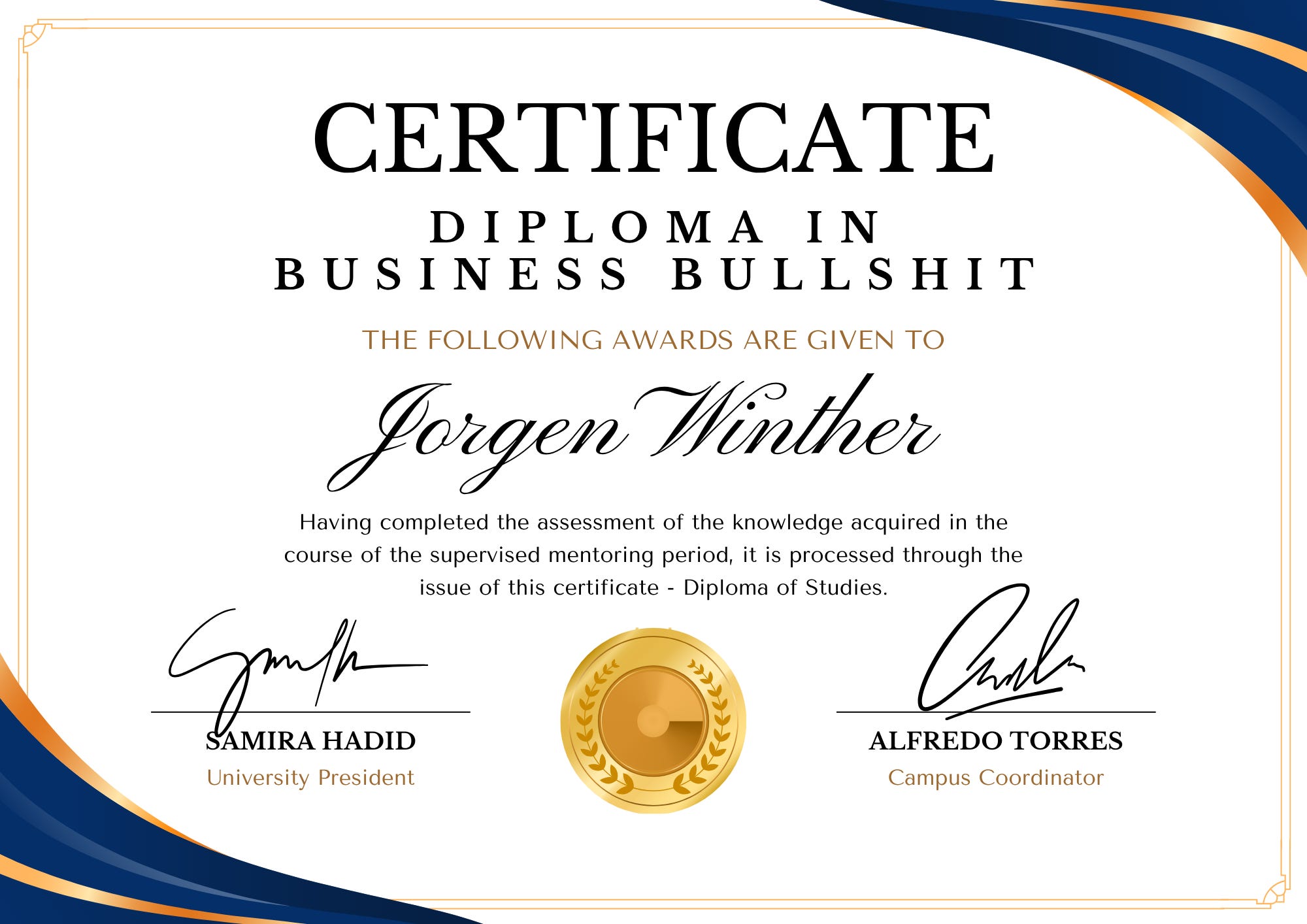
Through my careeer, there has been a constant pressure to get the latest certifications in whatever was the hit at any time in business. A few years later, nobody typically cared about that certification, though. So, was it worth it?
For a long time, I was wondering what was happening when I proudly presented my CV with a list of courses and certificates, that I had spent time on getting, and sometimes also money. But then, nothing! Nobody cared. I was even criticized a couple of times for having a too long list of certifications – a few of the most relevant would be enough, they said.
Why was I not allowed to tell about those excellent skills I had worked to get?
In the IT business, there was a trend during some years for manufacturers of software to offer certifications in all their products, so that people could prove to a future employer that they were competent in using these, or so that a consulting company could prove the same to their customers. At times, the consulting company could then build up a combined amount of certifcations among their consultants and by that achieve a higher partner status with the manufacturer – meaning more marketing, lower purchase prices, and other benefits.
And IT employees in general had very little respect for those certifications. The common idea was that “anyone can walk in from the street and pass the exam”, while real skills came from years of hard work with the actual product, not a 2-day course followed by sitting an exam for an hour.
I have met many IT people who refused to ever take any of those certifications.
Of course, like so many other things in business, it ran amok. More and more diplomas were obtainable, and in general, you’d have to pay a great deal of money, typically 3-400 € per course day, and mostly, several such days were needed, plus a price for the exam, perhaps another 3-400 €.
Many certification companies appeared, where you could go and sit the exams, and sometimes these would also offer the official courses. Companies like Microsoft and Oracle would have dozens or even hundreds of different certifications to offer, often layered, so that you could get them on top of each other and build a bigger certification this way.
All this for the right to call yourself “MCP in Software Development” or some other creative title, that nobody would ever care about.
Except for those few occasions where they would care… And that was the problem, and still is today: even though most people in the IT business couldn’t care less about the certifications, there are some companies who require them from job applicants. At times. And always such ones that sound right but don’t mean anything for the actual work.
For instance, PRINCE2, a project management framework, was actually demanded from several freelance agencies until a few years ago, if you would want to work for them. If you didn’t have such a certification, they wouldn’t let you in. I got myself a couple of levels of PRINCE2, plus some more project management certifications, but I have never worked with the methodologies and frameworks they were about. And none of the companies I worked with or for cared if I had learned anything, or if I even knew the method. They just wanted me to have the certification.
They said that we then had “a common language” about project management. But we didn’t, because all the special words in the PRINCE2 framework are useful only if you do projects the PRINCE2 way – otherwise, most of those words are meaningless.
Whatever – you can go for certifications, also if you are not in the IT business, but by far most companies don’t care about them. If you find out that a company you want to work for requires it, you can of course decide to invest the money into a course and an exam, but if you don’t get the job, the money will likely be wasted.
Before the certification madness took off, it was often seen as good to have a list of courses (without the exam) on your CV. But that has also mostly changed into an anakronism, with the occasional exception in the shape of a company that asks for a list of courses you have attended.
So, in total, the status of this kind of qualification is that some consulting companies still need you to get certified, so that they can sell their services and get better terms with the vendors, and some job application systems require you to key them in. But otherwise, courses are now mostly used internally in companies as a reward for good work, and nobody will ever want you do actually do what you learned on the course.
Most recently, during the last few years, the “portfolio” concept has appeared in some business areas, for some kinds of jobs. Architects and graphical designers have always needed to bring a large, flat bag (a portfolio briefcase) with them when going for a job interview, because the potential new employer would want to see what they were capable of drawing.
That concept has then spread into areas such as data analytics, where you would put a description somewhere on the Internet of some of your projects, complete with screenshots or working examples of some of your dashboards. I have been asked for something similar also for programming jobs, where GitHub has become the place for putting example projects – so that the future employer can look through the program code you have proved capable of making.
However, lately some signs have appeared that also this concept is dying out: several people have begun criticizing most of the portfolios they have seen, saying that the example projects were not sufficiently original, and nobody would want to look at them. They instead suggested to either skip the idea, or to create truly amazing and unique projects on the portfolios, and only one or two, not a long line of them. And especially, they should not try to display your skills in various design or programming tools, because nobody cared.
Nobody cares.
That seems to be a mantra for the younger generation of hiring managers and recruiters. Until recently, everybody involved in recruiting would care about your skills, and look for signs that you actually had them. But not anymore, it seems.
My general suggestion is, therefore – despite myself having a ton of certifications and course certificates – that you do not prioritize this. I do suggest you to learn about the topics, and make sure that you know what PRINCE2 or other such business bullshit terms are about, and also that you can work with the methods, etc., if they are indeed used in your area of business. But paying big money for courses and exams seems to be wasted, as the world looks now. Save a bit of money so that you can go for a certification if you run into a situation that requires it, but don’t take it in advance “just to be on the safe side” – because, nobody cares.
As for the portfolio: if your business area has such a trend, then try to find out what others do – those who actually get a job on it – and try to do something similar. Don’t overstate it, and don’t try to show off, as this seems to work negatively on some managers.
Mostly, the industry providing courses, certificates, and sometimes “hosting for your portfolio” are benefiting from promoting these ideas. And mostly, everybody else care very little about them, apart from the hopeful job seekers who are willing to do anything to improve their chances to get a job.
It is, and will always be, a mystery to me, how some people can react negatively on your attempt to learn more, and that you even got a piece of paper that shows you have learned, it, but this is how it is. We live in a society now where your future employer isn’t interested in your skills but rather in their needs – so they want you to show that you can fulfull those needs, and everything else about your professional competence is totally uninteresting to them.
Apart from your age, your looks, language, and all the other things that define your social acceptance level, as described in previous articles. But they don’t know that they look at all this – they believe that they look at hard skills only, sometimes with some defined soft skills on top. All the prejudices and other psychological parameters are mostly more significant, but unknown to them.